Monday, 26 March 2018

What It Means to Teach for Nigeria


Induction

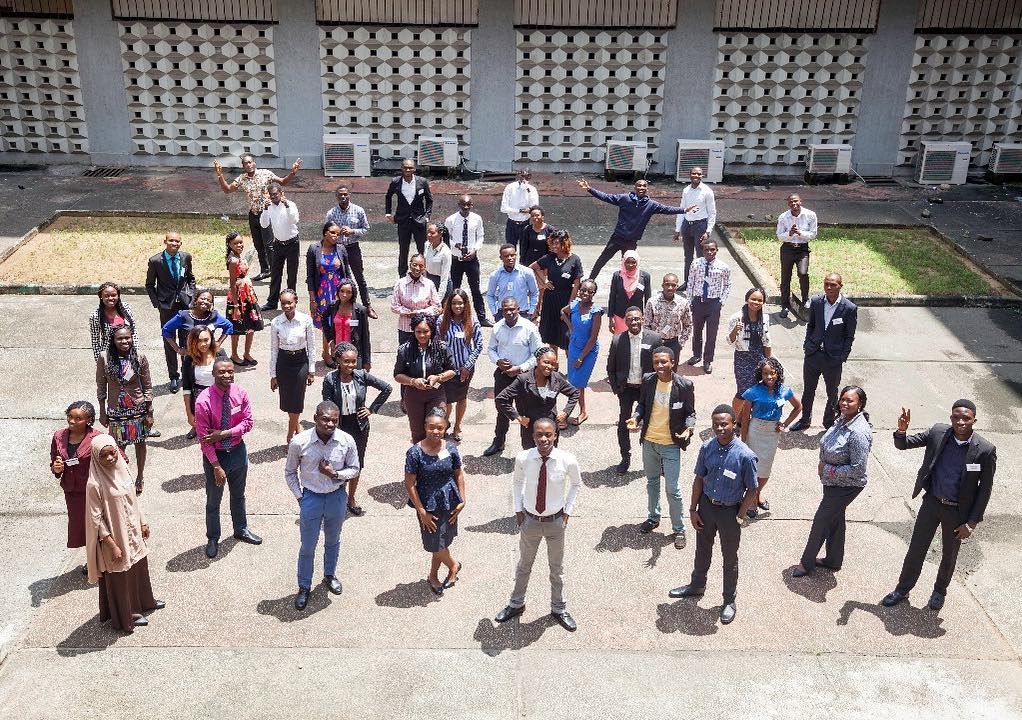
The first person I see is Dami. The tall, lean fellow that I’d met during the interview process sits among dozens of other fellows, leafing through some papers. The hall where we are asked to keep our luggage and complete our registration is a bit tense, thick with an air of uncertainty as the fellows, corporately dressed, exchange light pleasantries as if grateful enough that they won’t be embarking on this journey alone.

The day is July 10. A moist morning in Lagos. We are converging in City Hall’s education hub to be inducted into a fellowship that would span two years to Teach for Nigeria—TFN. The fellowship will begin with a six-week Summer Training Institute (STI), scheduled to start after induction.
Dami and I greet with a warm embrace. He sees my luggage and immediately categorizes me with those who have come to STI prepared as opposed to his own handy luggage. We laugh, tentatively, and then follow our laughter with grim, tired faces that subtly reveals the nagging question of, “what in the world are we doing here?” that we still nurse.

We, the fellows, have joined this fellowship with our stories stagnant in our throats, waiting to gush out like water from leaking tap. Trained by dysfunctional education system, landed jobs with slow beginnings, frustrated by the current state of the country, we all came with our stories, like our baggage, in different shapes, colors and sizes, still uncertain on that July morning and several days afterwards. Of what it truly entails to Teach for Nigeria, of what we’d say when people ask about our new “job”.

Pre-Institute

“I got a fellowship with an NGO,” I often said, prior to STI, when family and friends wanted to know why I was quitting my old job. They would lighten up, an involuntary flash, probably at the last word, and ask, “what NGO?”
“Teach for Nigeria,” I’d say, and there is this smirk on their faces.
“You will be teaching?”
“No, not really.” I’d come up with a vague explanation that would make TFN seem like one of those organizations with plush offices, where I’d lounge under air conditioning, gawking at our far flung beneficiaries on a computer screen.

Institute

Training institute is a serene place with a sprawling green campus, a vast expanse of field. I am luxuriating in the sweet smell of flowers and trees. Facilitators come and go, facilitating sessions on pedagogy, further revealing the education crisis in Nigeria, urging us to go to the fields and be the solution.

Days are trudging into weeks and we are internalizing the word “inequity” and it is becoming a compass, gradually navigating us to what it means to Teach for Nigeria. Inequity is forming the core of our daily analysis; it is helping us remember how underserved the schools we attended were, how our former teachers shoved down our throats their obsolete knowledge, expecting us to churn out that knowledge and compete with it in a fast, evolving society, how little they knew, how much they might have wanted us to know.

One of institute’s many wonders is fellows’ ability to learn quick and divulge fast; the willingness to surrender to that task which will strengthen our resolve about our new commitment. We are beginning to remember our past lives, our previous days by daily self-reflections. We reflect to become better persons at who we are, what we do, to know the essence of STI and how the sessions we are having will help us grasp better this fellowship, our fellowship.

Institute is also about movies and pizzas, about fatigue from playing football and swimming practice, about frayed nerves from writing the first lesson plan to the first day in class at teaching practice, about conquering our fears and questioning our prejudices. We are taking time out, in a coffee-shop like room, every night, to share our life maps, to tell our stories. We listen to each fellow stand and chronicle their life’s journey using a collage or a computer. We are becoming twenty-first century teachers, the type we never had, who consider all the type of learners in their classrooms when teaching. We cry when a fellow shares and cries. We snap our fingers at their stellar achievements, making them glow with pride. We are learning the art of empathy and praise, the skill of listening without judging. This is what it means to Teach for Nigeria.

 It means bonding with exceptionally smart fellows who decided to teach in low quality schools instead of hunting for, and landing well admired jobs.  It means rewriting the future of Nigeria, helping younger generation have the type of education that will make them global competitors. It means being a teacher, and no, not in classrooms with air conditioners, but in classrooms where even without piercingly white ceilings and lofty arm chairs, our pupils will learn to be in search of knowledge and wonders.


Tuesday, 3 March 2015

When Caution Isn't Enough


My cousin Tinuke had taken my two nieces—Farida and Fadila—aged 6 and 3 respectively on a weekend treat with her friends and colleagues.  In a particular gathering filled with adults engaged in hush tone conversations, Farida and Fadila with some few other kids were playing in loud voices. Three year old Fadila, with the frenzy of a baby, had been playing with her flowing dress, raising it up and down. “Fadila,”Farida said in a draggy loud tone, the type an alarmed child uses, abruptly stopping her play with other kids, “you’re opening your body like a Christian.”

Tinuke was amazed and at the same time ashamed. The stunned, discerning adults had turned to look at the kid who had said that, trying to trace her to her mother or something. She, Tinuke, was amazed that such statement had come out of Farida (such a little girl), and ashamed at the biting eyes of adults following poor Fadila as she found her way to Tinuke’s hands with the guilt of a baby who’s been scolded for a wrongdoing.

“Where did you learn that,”Tinuke later asked Farida after they had left the gathering, cautioning her not to say that again. “Lateefa told me,” Farida said.

Lateefa, somewhat between 12 to 14 years old, had recently been invited by the little girls’ mother to help with household chores while she attends school. Born to uneducated parents who had spent a great number of their lives in the village, Lateefa holds an endearing view of Islam and is beginning to learn to speak and write good English. Prior to her coming to the city, Lateefa had barely mixed with other children from other tribes and a few from the Christian faith. She had however, learned something deep, that which could be perceived as denigrating about Christians and she’s ardently holding on to it, spreading it like a contagious illness to little children. Where she had learned it from could vary from home to her former government school or on the streets.

During the period when Jos was experiencing series of sectarian violence, my mentor was driving with his little boy in the front seat when the boy suddenly leaped up the chair as the car sped past some razed houses and said, “Daddy, see all the houses that Muslim people burnt.” The man almost choked on the steering before pulling over to inquire where he had learned that. Certainly not his home, he knew. And after several pressures, he could still not remember where he had heard that only Muslims burnt houses and killed people. The father corrected him, and taught him never to utter any hate word about any group of people or religion. Bad things are done only by bad people; and anybody, whether Christians or Muslims could be bad, he sounded that to the eight year old.
Tinuke and my sister in-law later cautioned Lateefa, and are still cautioning her, on how she would let go some other preconceived notions she might hold about other people. It’s a tedious process but there are positive results. 

Just like we don’t know when we cross the faint line and make a racist speech, so is that of religion. Caution is the word we often say. But I wonder how many people—teen-agers and adults—out there still need to be cautioned. And caution is such an illusion that some people may perceive as unnecessary or irrelevant or nonexistent. Had Tinuke and my mentor not found the words spoken by the kids as deriding, the kids wouldn’t have been cautioned, leaving the innocent children to spread prejudice and grow in hate without even knowing the meaning or its effects.

And this is another reason why caution is such a vague word. A good number of the Nigerian parents have deliberately left children, and anything that has to do with their religious knowledge or ideas about humanity, to the invincible hands.  So we are careful with what kids learn about sex, menstruation and wet dreams. We warn them about strangers, not because of what they will learn from strangers, but so they don’t collect candies and get kidnapped. Before we enroll them in schools, we inquire about schools with A-list teachers, excellent track records in school leaving examinations, fine arrangements for extracurricular activities. For those who can’t afford the expensive schools, education, no matter how it is churned out to these children, is the ultimate goal. Any other thing learned from these schools is, well, part of education. What we hope they learn about faith in these schools are lessons that will make them meek and pious. While not bad things for kids to learn these traits, we also leave the moral and the significance of all these acts of faith to be taught by the Sunday school teachers and Koranic teachers only. 

Another reason why caution may not be applicable here is because extremism, as we have taken it, is only when someone blows up everyone in a mall for his or her faith or joins a violent religious fighters or hate groups before they are termed extremist hence, only then such person needs to be cautioned. It has mostly be proven that most dangerous extremists or fanatics have the tendency to have grown with believe like playing with a Christian as a Muslim is sin and tantamount to roasting in hell, and vice versa. We sometimes laugh it off when kids say something like Farida said, but are smirked when we hear them talk about sex or breasts or butts.

Everyone talks about hate today, but we are somewhat lazy tracing it down to how it all began. Racism began by some people of a particular race believing they were superior to another race. Color had been perceived as inferior, which wasn’t really seen as a big deal. Then it degenerated to people killing other people because of their colors, and then we saw a need to stop racism. Hate word, however funny or regardless of who is saying it, is hate word. If we haven’t seen a need to trace where it’s springing from, and halting it from there, then we are not ready to curb extremism or fanaticism in the world, which so far has been a terrible scourge that is bedeviling humanity.

Monday, 9 February 2015

How Did We Get Here?

It was an easy Sunday morning, following a tensed Saturday night, after Professor Jega, INEC chair, had announced the postponement of the Nigeria's general elections. Here in Jos, the wind rustles the earth slowly, softly as if in solidarity with the silence church goers and Nigerians carried after the announcement. The day the decision was to be made had been dragged long by meeting after meeting, and after several consultations, as Jega said, the chair finally announced at about midnight the resolution of the commission to shift the election, a decision which hardened the hearts of Nigerians. Largely, it is less about the shift and more about how the sense of a fizzling future is creating a kind of dementia of despair.

Four years ago, after the general elections brought President Jonathan to power, which sparked series of violence in some northern parts of the country, the government assured us that serious measures will be introduced to forestall a re-occurrence. In the intervening years, the country witnessed raging attacks from a terrorist group that seemed to have grown into fierce hulks. These attacks dragged on for so long that it is now determining the fate of our country's general elections, albeit the fear of post-election violence still rages.

'How did we get here?' A friend told me with a wearied voice over the phone after Jega's speech. 'Where?' I asked trying to play dumb. 'Guy, this state of despondency and utter fear. I'm more pained by the current state of the country than the shift. Isn't the mess we're in today the forewarning of an impending misfortune?' It is, I thought. He hung up with a very long hiss. And I wondered why it took us this long to realize our gradual transitioning into this state of despair.

We got here because of our gullibility. Ours is a kind of people who believe so much in our institutions that we throw our own conscious minds to the wind. We anticipate to know, and stay informed, from the information our politicians, pastors, imams, the media and teachers are feeding us with. That which is self-enlightening has been so relegated to the reserve because we prefer to be spoon-fed. And so when a strange thing happens, like the postponement of a general election, we turn to our spring of information to feed us on the implication of that, just like we have cheaply believed the reasons stated for the shift.

We got here because of the way we moved here. It is good, someone once said, after I complained that we moved on too fast following the occurrence of any tragedy. Don't you know, he gave his reasons, that moving too fast shows that we are not deterred by the current state of a situation? We are resilient, he concluded. And I imagined his resilience, the type he and I have constantly seen, which meant recovering too fast only to be befallen by another tragedy just before we're done ascertaining the level of our initial ruins. We have been leaving in denial, which we learned to live in by the pacifying words we hear everyday. So we move on immediately a tragedy occurs before asking questions. We move on because it never befell us. And now we wonder in great dismay that it's over five years since we've been battling terrorism. Northeast had seemed so far-flung, like a miserable desert on a desolate land that its footage and pictures on the TV is like something from war-torn Somalia. We have forgotten that we lose a part of us each time a bomb goes up in Borno or Damaturu.

Those little lost parts of us have now summed up into a whole, deciding our fate as a collective people. Five years ago who would have thought that four states, barely a quarter of the entire states in the country, will be used as a major reason why we won't be holding elections as scheduled. We gave up thinking because our government said they were on top of the situation, because all we have often done, just like our clergies urge us to do, is to pray for the repose of the lost souls.

As the Sunday gradually winds to an end, I imagine a very busy week advanced by debates regarding INEC's decision. But I hope that this critical decision will mark our desire to begin the process of knowing every little step we take. Not only the type of knowledge that we sought from politicians, clergies or institutions, but also the type which will inform us about us and about our future.

@olaomojarabi


Tuesday, 23 December 2014

Imagine Nigeria Without Writers


This year, I read opinion pieces and articles on Nigeria's newspapers and blogs than I had read in years. From Elnathan John's weekly humorous, but reflective satirical pieces to Tolu Ogunlesi's deep, and debate provoking articles. I read pieces from Nigerians who learned to write, effectively, out of strong interior need to say something relevant. These articles flooded the newspapers- hard and soft copies- and while some of the writers were angry, others guided their humane, not losing their sense of humor in the process of reflecting on the conditions of the country. Regardless, however, they all have proven that Nigerians are conscious of their challenges, and are ready to keep strewing words together until we get it straight in the country.

If words were swords, we would have had a war sprung out of our writers' opinions this year. While some discerning citizens could sense the senseless directions of our situation- from bad governance to deep-rooted corruption- others, whose purpose it is to defend a system that they know is sick, and is dying from terminal diseases, are willing to keep defending the rot because of the benefits they are anticipating in the disjointed polity and system; or have apparently lost their faculties hence, will defend any rash thoughts from our decision makers. Replies to letters, articles countering articles, and opinionated essays all stretched the writing process.

In the end, the best writers, for me, were those who didn't have to benefit or stand the chance of benefiting from any side, who didn't have to be paid or contracted to write before they wrote. They were those whose gift of the art assured me that though we all may sleep in the same bed, we all can't lie in the same direction. To me, they have best governed Nigeria than any government may have attempted in the country this year. It terrifies me to imagine this, but picture a Nigeria without writers. Can you? What do you see?

These writers wrote when the country re-based and millions of Nigerians had no idea what re-basing meant; and provided clear writings when we devalued our Naira, and Nigerians weren't sure if it was a destructive or a constructive decision to devalue. Since millions of Nigerians are deprived of the skills of reading, these writers were hopeful that the population that could read would read these articles and disseminate the ideas to those who couldn't read; therefore, spread the word.

The enlightenment kept coming because the one-hour or half-hour news on TV and radio, they writers were sure, may not be seen or heard by everyone, because everyone, it seemed, was tired of the filtered news, the produced news castings. No wonder we have the most heated and healthy debates at the newspaper stands. With online writings, also, people could talk back at the comment sections. Nothing liberates the human minds like having an outlet to drop their opinions following other opinions. They hate to be spoon-fed.

We had a turbulent 2014, and were sometimes relieved of this tide with comic-reliefs from our politicians and their cohorts. And so the two instances mostly weaved, produced reliefs that made us remember that we, too, can still laugh, that we haven't been overwhelmed by tragedy. And that has consistently been done by writers. Writers who stayed up nights to sink deep thoughts into ideas that invoked emotions that sometimes provoked reactions. Writers who made us remember our girls in captivity. They constantly reminded us that people in the north east are Nigerians who die everyday. Writers who crafted unbiased reasons regarding our country's need for a change of leadership, and desperately so, with accurate analogies. Writers who dared to challenge, whose words were often published the way they were submitted. Writers whose writings didn't put food on their tables, yet they wrote.

Towards the end of every year, series of awards – from music to movies – are often organized to appreciate the efforts of people who distinguished themselves in various activities in these fields. While I am not concerned about an award like this for our writers, I do hope that someone, even their publishers, would give them some appraisals at the end of every year. This may not be necessary, you might think, but these efforts keep everything- from politics to entertainment, sports to academics- going. They stir-up the human consciousness, making the dailies one of the first things we want to see when we rise up every morning.

I grew up reading books that nursed my desire for writing. Then when I started weaving words that appeared to me like magic, I was sometimes confused with where to channel them. The validation came when I began reading newspapers and online contributors. From them, I subconsciously learned the bitter truth that the chief aim of the writer, amongst other things, is to instruct and excite. It is, above all, to speak the truth without any hope of retribution, without any fear of being reprimanded. 
@olaomojarabi

Saturday, 22 November 2014

Views From a Workshop Participant

I have always imagined the classes of writing workshops. A group of thinkers, whose opinions of life are formed into creative words, gathered in a room over coffee or bottles of water, poring over books with experienced facilitators presiding over the debates and discussions that drive the workshop. I often imagine the facilitators. Self-assured writers extolling their accomplished works, maybe opinionated or cynics, who are graceful of several prizes, grateful for the fact that a collection of beginning writers trusted them so much to take time out of bill-paying schedules just to learn ways of improving their crafts from the facilitators' "wealth of experience".

My imagination was often inspired by stories from people who had attended past workshops or writings on how workshops were organized in anthologies. Getting into workshops, I was almost made to believe, was like getting into Harvard. Highly selective, rigorous work loads and competitive class styles. So, you might want to wait to have your works published in Granta or The New Yorker before sending-in a sampled work to any workshop that steals your fancy.

I applied to Chimamanda's Farafina workshop once and was not accepted. It was two years ago. I paced the lenght of my room, worried about the fact that I had specifically written the story that I sent for consideration, sinking thoughts and ideas just so it is fresh and poignant, yet did not make it. I gave up applying in subsequent years, partly because I felt betrayed and partly because I stopped thinking of my works as good enough. Instead, I sank more time into reading great books- from fiction to non-fiction, short stories to articles- and carved the ideas that flowed out of excessive readings into writings that spoke what I wanted to speak, and how I wanted it spoken.

I stayed with my works and breathe life into them, believing they would someday be good enough to have them get me into workshops. I desperately wanted to be a workshop participant because I thought of it as a measuring tool that would assert how ready I was to create a world with words, to see if my ideas were ready to grip millions of imaginations across the world. I was right. Your fellow participants are critiques who try to make their words ring true of your work, trusting you would do same to theirs.

The Abuja writing workshop facilitated by Elnathan John opened the first door to this world that would end delirious and disturbing thinkings of workshops. A one-day workshop that sparked interesting debates among promising writers. Set in a cozy environment with a seminar-style sitting arrangement, I had an experience that revealed to me that getting into workshop is like getting published.

Imagine the workshop facilitator as your publishing agent. She has several works published (couple of non-fiction inclusive); you are still scribbling down ideas to sharpen your craft. The facilitator, like the publisher, doesn't discuss her published works in the workshop. She hates to do that. She discusses yours, like an agent who has seen your work as promising, but is beggging that you re-work it so that it is better improved. It is the dream of every agent to have a work published that would sweep the world off its feet. So does the facilitator, whether said or unsaid, wishes that her students go out to be an excellent ambassadors of her programme.

Therefore, an ideal workshop facilitator won't define grammar or teach you how to use tenses and punctuations. If your primary school english teacher deprived you that, and this inner voice calls you to be a writer, better hit the bookshop and grab a brighter grammer. Workshops start with basic attributes of writing that helps improve your styles, choice of words, brevity, and skills that help strenghten your use of sensory languages. Like Toni Morrison once said, that she can't teach writing, but she can help with the comfort. Writing workshop is not for non-writers. Your writing sample would even say it, if you're being honest. They are experienced people whose familiarity with words over the years can easily reveal who is gifted and who isn't.

Upon my return from the workshop, however, some friends who also write, wanted to know how it went. If we were given per diems. Did we have fat meals? What was Elnathan really like? And from my past experience of how I had heard and read misleading stories about workshops, I decided to pass on a belief that I have always had, which the workshop helped strengthen, to others: write for the love of it, write for your inner voice. Once you do this, and learn to do it well, you would possess the skeleton key that would unlock doors to workshops and, maybe, publishing houses.


Friday, 24 October 2014

When Campus Politics Mirror a Divided Nation


The two major entrances into the Samaru campus of ABU Zaria have long, tiled paths. Flanked by these paths are trees and neatly trimmed flowers barricaded with lawns, dry carved woods hanging loosely from them with stern warning: No lawn crossing. This is to protect the blooming flowers and evergreen landscaping from being trampled. The trees, some of which look like they've been planted since the school was first built, have trunks, large enough to accommodate students' posters for social programs on campus or pitch politics to you with campaign posters. The posters on wall paths and tree trunks are bits of what to expect as you approach student hostels and lecture theaters.

You'd find the students in clumps. Cohorts are either devising winning strategies for their candidate or an opposition group is discussing the stunt pulled by their opponent overnight. You might be run into, by a contesting candidate himself, distributing flyers and canvassing for votes for a particular office. The semester is fast folding to an end, and despite the rigor that comes with the preparation for exams, the students are driving campaigns around the campus, heating it up with strategies.

The student union elections in ABU, like in most Nigerian campuses and like the general elections in the country, is not devoid of sentiments. This bitter reminder of how divided we are re-surges as soon as the election bells are rung. And so, out of the desperation to win by any contesting candidate who perceives himself as an underdog that is neither a Muslim nor core arewa, there is an intense search for a name that is northern-like, and an outfit that portrays him as "one of us" on campaign posters.

Bello Rilwan, the president of political science students, a yoruba-muslim, thinks this as plain folk. According to him, "it's a strategy that has been working over the years for some students who think the only means of winning an election in a school on the northern soil is dressing and bearing the names of people from such region." The campaign posters come in different qualities and styles. On it, some candidates give a phrasal line of their manifestos; and some boldly flaunt names and pose in pictures with traditional outfit on the posters, beaming as if nomenclatures could be an automatic tickets to victory. You may find a northern-christian with a name like Audu Farouk John. The "Farouk" may be a middle name that has never been adopted before. A daring contestant may even abbreviate the John as "J", blurring every possibility of outright rejection.

While the political science president perceives this as a working means for some, another candidate contesting for a post of secretary general, Nathaniel Haruna, a southern-christian, thinks it is pure inferiority complex to conceal your identity just to win an election. He believes that "competence and responsibility" are the tools he possesses, and these will ultimately help him win the election. In a country where merit has been clouded by tribe and religion, some may perceive his clairvoyance as illusions. His opponent, a northern Muslim may not be as half competent, or could be better competent than he is; but so many are of the opinions that past experiences show sentiments prevail over competence, regardless of who is better qualified.

There has been raging debates ranging from where this problem of ethnic and religious politics stemmed from. The social background, including family upbringing, religious homes and parochial beliefs have often been attributed as the breeding spots for such myopia. Bello Rilwan agrees, too. And most students from the department he is currently leading thinks he has done a tremendous work as a leader. Born and raised in Lagos with education being his only touch with the north, he thinks service should be the forerunner of any political aspirant. It is, however, not certain if this quest for service was the strategy that worked for Rilwan when he emerged as the president of his department last year.

Another contestant, who chose anonymity, thinks the environment influences the disguising choices aspirants make. Just like majority of voters in Nigeria's general election would weigh money and material comforts over competence, students, he claims, often prefer a fellow religious partner and tribal person over any other candidate not inclined towards their beliefs. He is frank about this and wouldn't budge when I sighted Rilwan as yoruba who had won, beating a northern candidate. Nathaniel, however, thinks politics of sentiment is fast dwindling in his faculty due to the orientation the social science students are receiving from their enlightening courses. He is of the high believe that it may, someday, totally end.

While doubters may disagree with Nathaniel's opinion, an event which recently happened in his faculty have been perceived by some as a beginning to an end of such polarization. A president of a department in the faculty was charged with misappropriation of funds and the duos who raised this alarm with constructive petitions were a southern-christian and a northern-muslim. Their courage was a bold step that opened the eyes of many to what they were seemingly blinded to. Even though this president may have misappropriated with impunity, the charge by these whistle blowers was a conscious awakening that though we may not unanimously vote you into office, we will collectively expose you. This may be a first bold step, optimists like Nathaniel are likely to think, towards fighting a political ill that is pervasive in a nation divided across thick ethno-religious lines.

Twitter@olaomojarabi

Tuesday, 2 September 2014

Dear Jos, We Still Remember

When the tension and trauma that trailed the Jos crisis began to subside, people started sharing stories of how they had managed to outlive death. In the house where we first lived when we moved to Jos, the story had been that the entire block of apartments had been thrown into disarray the night the crisis started, forcing frailed, old men and women and the young to scale fences and jump ridges of farmlands behind the house as the marauders who helped fueled the pandemonium stormed houses owned by Muslims with machetes and knives in retaliation of what they heard were been done to their fellow Christians who owned houses in the Muslim-dominated areas.

It was a time when people lived in Jos without any delineation of residential areas across religious and tribal divides. That same night, the landlord of the previous house we lived in, Baba, went missing and never returned. Three days later, his body was found, washed up by the riverbank, reeking a fusty smell that seem to assail my nostrils right now as I recollect.

The story of Jos, like that of any happy town once blessed with steady calm then shattered by the ruins of violence, is of mixed feelings. Home of peace. A community of people who lived and pursued the happiness of life without sticking their noses into the affairs of others. You could worship the sun and no one would care a hoot; and people only mimicked your Hausa or English when it was heavily accented by the mother tongue.

They didn't want to know why you spoke it. It was a way of life that was not truncated by one's state of origin or the religion you professed. Hence, there was no need to ask which area had the highest number of churches or mosques before you rented an apartment. You did not have to think that a people who didn't even want to know where you came from would overnight turn wild wolves that would make you flee the comfort of your home with frayed mind into the dark night.

Burnt cars and half-razed houses still litter some streets in Jos today. The atmosphere is peaceful and calm, created by an air of tolerance that seemed to have been forcefully accepted because of the daily hustles for a descent living. You'd not fail to notice how the slightest irritation could trigger an altercation; by the jingles trailing the radio stations advocating for peaceful co-existence; by the careful selection of the markets you patronize and the areas you visit.

The town, sometimes paraded by armed soldiers, is bustling but shrouded with fear because people are aware of the fact that we all still remember.

We move on quickly as Nigerians. And it's amazing how. Some perceive this as an unusual strength, while others see it as just being trauma fatigued. We are either so used to being plagued with trauma that we tend to have settled in for it as a norm; or we just don't see any sense in wasting time gathering sensible, sentiment-free information to truly find out why a people who lived together for years suddenly turned monsters that feared each other.

And this is why soon, too soon, after an incident occurs, just before we catch our breath from it ruins, another sways in. We cover the fire with the ash, forgetting that the ash is also the remains of the fire. We just have to move on, our Nigerian clock seemed to be reminding; after all, funerals should only be depressing when they are your own, how odd when we tend to believe this.

Come September 7, it would be exactly thirteen years since Jos was plunged into a mindless ethno-religious crises that scooped thousands of lives away, spanning almost a decade. The date resounds for me who didn't lose anyone or property, and it makes me think of those who did. The family of Baba, our former landlord, keeps a visible memory of him.

Some of them are his pictures. In one them, the 70's type of picture you refer to as 'old school', he wears a cone-shaped dashiki, smiling softly with anticipation. He had the photograph taken in front of the house he first built only after a few years that he arrived Jos. In another, he stands behind Mama, his only wife, seated on a wooden chair, the glow of a newlyweds clearly etched on their young faces. Together, they must have envisaged a rewarding future that could only be achieved as Nigerians, in Nigeria. I also think of a distant neighbour whose father had gone out, during the time when the crisis would suddenly resurge, after a period of rescission, not to come back again. The family, I am sure, still hopes he walks home someday.

I think of relatives who sold their houses in a hurry just to relocate and start a new life, and are still finding it difficult to pick the pieces of their former life in their new settlement. And I wonder if we have truly moved on. Chances are that when we forcefully move on as a people from trauma just because our lives depend on moving, and not because we need to avoid reoccurrence, we might be pulled back to the spot where it all started to clean the mess we left behind.

Here was a crisis that left indelible marks on a state for a disturbing long period of time, and we think memories will be forgotten? We need to understand that true healing and forgiveness only occurs when the hurting have seen reasons to heal, not when soldiers are sent to the streets to avoid grieving people climbing on each other. The soldier and the state, we fail to remember, are seldom in good terms. We must move on, yes! But we can't afford to leave the senseless cause that initially stalled our movement behind without properly smashing its ugly head.

For if we fail to do that, that ugly head may re-surface and scare us back to our initial spot.

May all the lost souls of the Jos crisis find peace wherever they may be.

Twittter- @olaomojarabi

Friday, 22 August 2014

Taken Away by Ebola


I imagine her office. Oval shaped, behind her busy table is a huge see-through shelve that displayed her plaques and awards -- a hardworking doctor who had dedicated long years of service to saving life, and to humanity, some revealed. The table is wide, and amidst the objects of medics strewed on it is her family picture, all smiling, all exposing a set of excellent teeth. On that day, when a patient was wheeled into the hospital, she might have taken another look at her accomplishments; another look at her beautiful family well-framed in a nicely shot photo before dashing out to attend to him.

When she passed, as preparation for her cremation begins, the husband and the son may take a last visit to this office-- not to remind themselves of her death, but to have a last connection with her dedication to service, to sniffle the objects that smelled of her and touch the things that felt like her because they may never touch her again. Even the smother of ash, the sad remains of her's, may be disposed, unsympathetically, by a government with preoccupied mind, a government that care less. And so she passed. From the same life she was desperate to save; from curbing the spread of a disease that may have sparked beyond its current spark had she discharged Sawyer, despite pressures that trailed his admittance.

Ebola drifted into Nigeria from Liberia. It had come, unexpectedly, from a comfortable looking Liberian, Patrick Sawyer, who seemed to possess all the comforts of life. Dr. Adadevoh, on duty the day he was admitted, must have received him, perhaps unalarmed because the initial symptoms of soar throat, pains, vomiting may have all been mistaken for a common fever. Perhaps because Sawyer didn't look like someone who could possibly have Ebola. Perhaps because Adadevoh must have trusted the Nigerian government to have the borders well screened of visitors from the troubled countries. She must have wrongly thought. Because she would end up being the first known Nigerian to contact the disease, and the fifth to die of it, after two nurses who had attended to Sawyer in that same hospital had initially died, followed by an ECOWAS official.

Adadevoh had a son and a husband. She was a daughter, an aunt, a cousin, maybe a niece or a sister. I imagine her circle of friends and colleagues. Graciously hoping, all praying that she recovered. I imagine her in an isolated ward, only visited by few friends and families all masked, barely touching her, only gesturing and nodding, leaving almost immediately they came. In one of her pictures, she had firm eyes, Adadevoh's, like those of a woman who seemed to have them fixated on a goal, and is intent to have that goal achieved. She must have been courageous; or otherwise, would have sent anything from Liberia to a no-sight distance. In her isolation, during her battle with the deadly Ebola, she must have thought of all these and that and become embittered, sad that she couldn't live to see her exuding more courage; or see her boy and husband clap her out of isolation like Kent Brantly, the American doctor. Death, in its grieving state, must have clasped her with firm arms, luring her into a sound sleep in her wildest thought. In the words of Decontee Sawyer, wife of the deceased Patrick Sawyer:

                              "I share the pains that the family members
                             of the Nigerian doctor are going through.
                             It is just a pity that Patrick had to cause 
                            this damage both in Liberia and Nigeria. I
                           want to reach out to them and express how
                          deeply saddened and sorry I am for their
                          loss and pain...I pray for all of the families
                          whose loved ones were taken away by this 
                          merciless killer Ebola, especially those
                          affected by Patrick's actions."
       
May we all have the courage to bear our irreplaceable losses. May the souls of all the departed from the Ebola scourge be in peace wherever they may be.

Thursday, 14 August 2014

A Notebook of Lost Memories

               
I recently had a list of books that I wanted to reread sent home. A few days later, the list came back with a couple of books. Behind the list is my father's thin but legible handwriting: could not go any further; carton too dusty. Among the books sent, however, is a notebook that I had once used when I started reading and when I was beginning to scribble down ideas that swirled in my head as inspiration for what seemed like writing struck. When I called to thank him, I did not bother to ask what informed his decision to include the notebook, or if it had been mistakenly added; he, in turn, did not say a word about it. His decision, whatever must have prompted it, has decided to take me on a tour of how I collected the literary pieces that awed and inspired me as a teenager.

It is a red-covered long note with white pages divided by blue horizontal lines. The edges of the sheets are now a fainted yellow from what seemed like an exposure to sunlight. The first page was dedicated to a quote by Maya Angelou, one of the few women in whose words I had understood that language could pull an enormous power that could trigger a change. The five pages that followed were not dissimilar from the first. Just that the quotes had come from random writers and poets who nothing, but their craft must have moved me to have an excerpt of their works written down. Edgar Allan Poe, Anton Chekhov, Earnest Hemingway, Zora Neale Hurston all had a few lines from their poetry, essays, short stories and autobiographies directly lifted and quoted. What struck me most was that as a beginning and inexperienced reader, I had found comfort in quality words and courage to have me led by these words to a destination that I could not tell; a place where no prescience could inform me of its safety, or risks.

The middle page is a bit busy with list of books and beside them were start and finish dates of each book. Their Eyes Were Watching God caught my attention. I had started reading it in February and had finished it in three days. Now I remember it was not such a book with much contents. Written in Haiti during her stint as a folklore collector and an anthropologist, Zora succinctly tells the tale of Janie Crawford, whose quest for identity takes her on a journey where she learns what love is. The book had nourished my curiosity about Zora. Later that year, in September, I would read Dust Tracks on a Road- an autobiography of her's. Through that I met other writers and poets like Langston Hughes. I would come to know the Harlem Renaissance as a period when a community of fastidious black writers and poets possessed the power of words and had also learned the economy of words to say so much in so little pages.

In 2005, a period when Jos was plunging in and out of series of sectarian crises, I had read autobiographies of Fredrick Douglas, Maya Angelou, and had taken a swift turn, during that same year, to read short stories of Checkhov, Poe, Woolf and Welty. In Welty's stories, I found a smooth blend of relationship between the white and the black race. To this day, I marvel at her gift of imagination; at how she carved out existence between different people with seemingly struggling and flourishing lives. They had all, in a strange manner, equipped my laboratory of words to describe experiences that someone within my age gap may have found uneasy to describe then. The black American authors had painted the horrors of slavery and emancipation of blacks in so clear terms that I could not stop explaining the travails beyond the content of history textbooks to a group of horrifying classmates. And so when Jos began experiencing a relative calm, and everyone saw peace and healing, I saw a town of smothering ruins. I met a people who still harbored hatred, but literature, my feeble mind must have oddly believed, could help bring solace to the minds of these people. Welty's works had exposed me to a realm of possibilities.

Flipping my notebook reveals further books that I must have read at random places and varying times. In class. At my father's desk in office while he worked on Saturdays. During long vacations. When I'm hurt or just having the fleeting moments of moodiness. Some I remembered by instances that had provoked them; some are hazy, but I try to figure out by vaguely written timelines. These books and stories and poems all had a significant impacts in me as a beginning reader who would end up becoming a budding writer. I didn't just want to read, now I realize. I wanted to become a better reader. The reason must have stemmed out of the desire to recount, to retell and to chronicle; or otherwise, I wouldn't have kept a notebook that I couldn't have told what I would make of it today.

I held the notebook in my hand and the thought of how it all began flooded me with memories. The red cover back is beginning to get dotted with white spots -- the signs of having been held for a long time before being packed. The edges are becoming rough, as if constantly browsed by termites. It smells of damp and the ink from written words are becoming erased with time. Poring over it for the last time, I turned to the last page. Amidst dates, names of books and authors scribbled, Langston Hughes' Dream Deferred loomed. I read it again and it felt new, like words carefully spoken by someone who has not spoken in years.

Saturday, 21 June 2014

Hard to Find

                                                                 
Mother had an excellent memory that traumatized me. She held on to dates and events immediately they happened, and kept holding on to them for a disturbing and amazingly long time.  She held on to dates and timelines of children’s death, of bad dreams, of disappointments. Like they were catalogued in a sort of mental archive, a part of her memory that would constantly allow her remind people of the evil of the devil, and of how much prayers and Jesus can work wonders.

And so after a certain incident that stole five years of my life, in a manner of speaking, she began to nag me like an ill-tempered ogre about finding Jesus. It was simply an incident. Yet her pastor had advised her, and asked her to warn me not to speak of it carelessly.

For how else could she explain the sudden death of one man, and the disappearance of another, months into their relationship with a young lady like me? I hated her idea of religion. If mama had brought Christianity to this world, I once told my Aunt Kemi, then no one would be a Christian.

It was August. Twenty-one days into the university lecturers’ strike, two years after Ade had gone without prior notice, and three years since Onimisi’s death, she reminded me. What are you doing about your soaring age? What are you doing about finding Jesus? What are you doing about having a man? You are in your second year at the University for Christ’s sake!

And when I tried to absolve myself of any of these accusations, saying that it wasn’t my fault, her retort would bite even harder. Whose fault is it that you are chasing thirty? She would bellow. She would remind me about how irresponsible the men in Lafia were, and how much she disliked Ade the first day I brought him home and how he had validated her presentiment of being dangerous the way he had abandoned me like a sour business deal.

 As I left Lafia for Jos that day in August, her words slashed my flesh like shards of broken glass. Aunt Kemi’s arms were as warm and open as ever. She understood me very well. Your mother asked me to tell you to accept Jesus, Aunty Kemi said with the grin that often made her look my age. She’d just called her sister to keep her mind at ease about my whereabouts. I was happy to be with her. Jos felt like nirvana.

Jos in August is radiant. It rains almost every day. And I seemed to get the idea that God was pleased with the way the flowers sprouted out of the mountains. Whenever I visited Aunt Kemi at her shop in Abuja market, the place further sealed my love for the people of Jos. Everybody worked with an air of confidence here.

It was in this soporific mood I met Toyo. “Has everyone found Jesus in Jos?” I asked with a sarcastic smile when he told me that he worshipped in the same church with Aunt Kemi. “I think so,” he replied with a flash humour that lightened my face. “Jos is an acronym for Jesus Our Saviour”, he added. And every day after that, with the exception of Sundays, I always met Toyo whose printing shop was two shops away from Aunt Kemi’s.

In the intervening months between August and December, I bonded effortlessly with Toyo the same way it happened with Onimisi in Zaria. We talked randomly about everything: the lingering lecturers’ strike; my mother; the weather. I liked his idea of calling me a nonconformist because it often nudged me out of the frame of mind that my mother was getting me into. So on one hazy December morning, I received the news of the strike’s ending with mixed feelings I couldn’t describe.

I kept faith with Toyo. In March, he came to the university in Zaria to see me and to apply for a post-graduate program. “I’m in love with you,” he told me matter-of-factly, “and I forever will”. I captured that moment and froze it in my mind for eternity.


In May, one hot evening, in the sweltering heat, the television screen came alive whilst the students lounged in the Common Room. Abuja market had just been bombed by the insurgents! I went outside for some fresh air. The gust of hot wind enveloped me. In the days and months to come, the tears would keep flowing whenever I remembered my mother’s words that all the shops on Aunt Kemi’s lane had been affected by the blast. It will be hard, I thought. It will be hard to find better memories.